
Root Canal Therapy
What is a root canal?
A root canal is one of the most common dental procedures performed, well over 14 million every year. This simple treatment can save your natural teeth and prevent the need of dental implants or bridges.
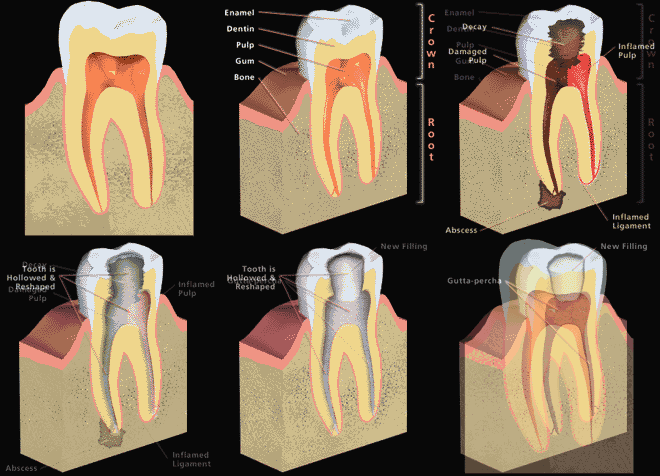
At the center of your tooth is pulp. Pulp is a collection of blood vessels that helps to build the surrounding tooth. Infection of the pulp can be caused by trauma to the tooth, deep decay, cracks and chips, or repeated dental procedures. Symptoms of the infection can be identified as visible injury or swelling of the tooth, sensitivity to temperature or pain in the tooth and gums.
If you experience any of these symptoms, your dentist will most likely recommend non-surgical treatment to eliminate the diseased pulp. This injured pulp is removed and the root canal system is thoroughly cleaned and sealed. This therapy usually involves local anesthesia and may be completed in one or more visits depending on the treatment required. Success for this type of treatment occurs in about 90% of cases. If your tooth is not amenable to endodontic treatment or the chance of success is unfavorable, you will be informed at the time of consultation or when a complication becomes evident during or after treatment. We use local anesthesia to eliminate discomfort. In addition, we will provide nitrous oxide analgesia if indicated. You will be able to drive home after your treatment, and you probably will be comfortable returning to your normal routine.
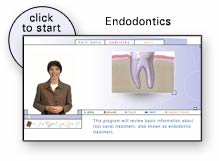
Endodontic Presentation
To provide you with a better understanding of endodontic procedures, we have provided the following multimedia presentation. Many common questions pertaining to root canal therapy are discussed.
 What happens after treatment?
 What happens after treatment?






When your root canal therapy has been completed, a record of your treatment will be sent to your restorative dentist. You should contact their office for a follow-up restoration within a few weeks of completion at our office. Your restorative dentist will decide on what type of restoration is necessary to protect your tooth. It is rare for endodontic patients to experience complications after routine endodontic treatment or microsurgery. If a problem does occur, however, we are available at all times to respond. To prevent further decay, continue to practice good dental hygiene.
How much will it cost?
The cost associated with this procedure can vary depending on factors such as the severity of damage to the affected tooth and which tooth is affected. In general, endodontic treatment is much less expensive than tooth removal and replacement with an artificial tooth.
Endodontic Associates of Bergen County
Patient Review
Very pleasant experience. All around great staff. Much better than I expected.
- Demos Kontonicolaou
Patient Review
This was one the most pleasant experiences i have ever had with getting a root canal. I never and i mean never felt any discomfort what so ever. The Dr and his staff are incredible. I would never hesitate to come back..
- George S
Patient Review
Victoria came in very nervous and apprehensive. Dr Feintuch was so wonderful and reassuring take she made it through with flying colors. She would like to know if he can do all, her dental work!!! Cannot reccomed him enough and what a great bed side manner. Victoria is only 16 and he made her feel great. Thank you for the great work
- Victoria P
Patient Review
No one looks forward to a dentist appointment especially for a root canal, but Dr. Feintuch changed that for me! It was the best experience I ever had despite a raging infection and pain. I would highly recommend him for a root canal, his expertise and professional front end and assistant made the appointments painless and pleasant.
- Sharon R
Patient Review
Dr. Feintuch was amazing! I came in here petrified after bad experiences elsewhere and he performed 2 root canals for me today with no pain. He also is very kind and was good at calming me down.
- Jill B